
MB&F founder Max Büsser once noted the difference between brands teaming up to create buzz and genuine collaborations that neither could achieve alone. While he wasn’t specifically speaking about motorsport watches, his insight captured the range of partnerships that have shaped the genre since Grand Prix racing’s earliest days. Over the decades, licensed racing timepieces have formed a fragmented yet illuminating picture of how commercial partnerships within Formula 1 and MotoGP have evolved. These watches offer motorsport fans a distinctive entry point into horology, while inviting watch enthusiasts to explore the rich history of Grand Prix racing.
1950s-1960s: Gifts and Quiet Beginnings
Before racing watches became commercial products, they were personal tokens of affiliation and gratitude. The earliest decades of Formula 1 and MotoGP had no commercial blueprint, which meant licensed watches were not yet a reality.
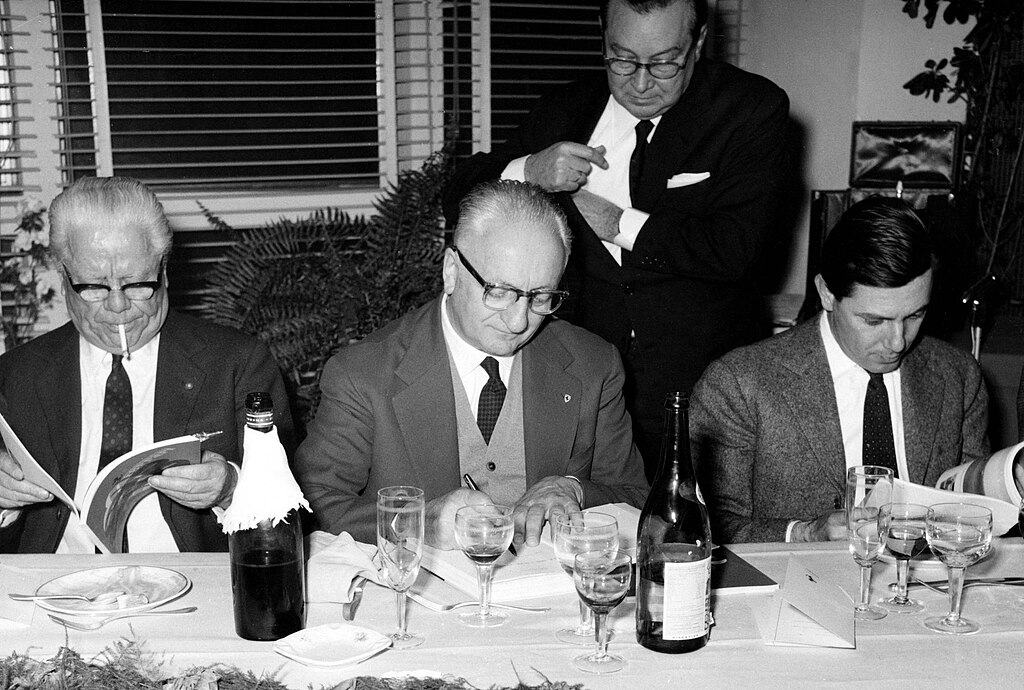
In the 1950s, Ferrari founder Enzo Ferrari privately commissioned small batches of custom watches. These were not official collaborations, but rather served as gifts to drivers, friends, and close collaborators. While the famous prancing horse adorned these dials in a way that looks familiar to modern eyes, they were still years away from being licensed products.
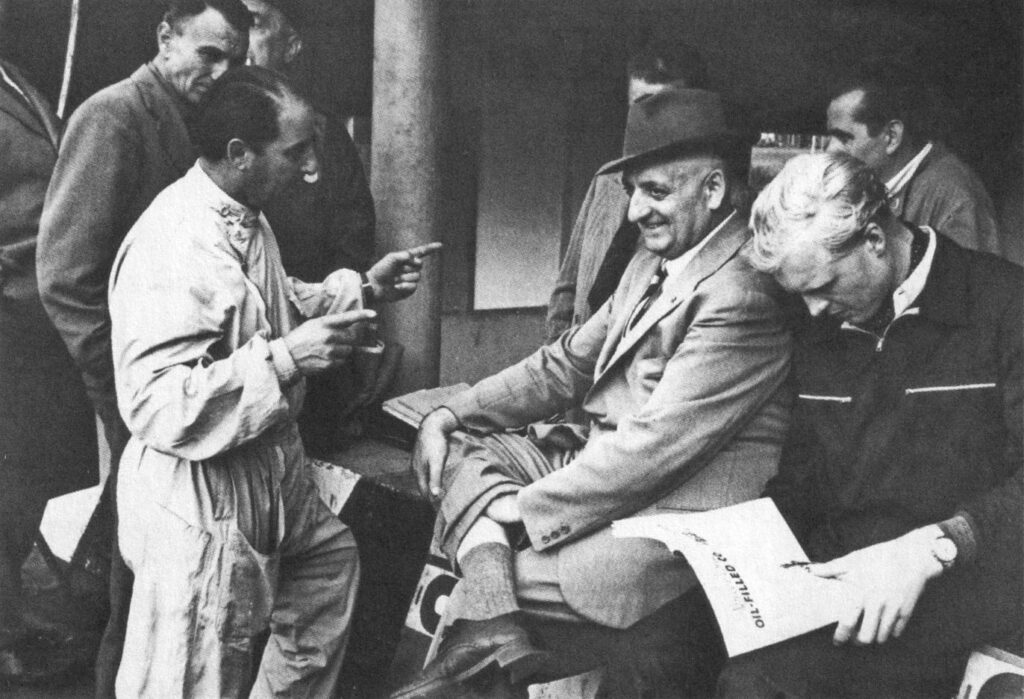
Enzo Ferrari at Monza in 1953. (Photo: Public domain, via Wikimedia Commons)
Meanwhile, in the same decade, Longines has been documented as serving a timekeeper role at certain Grand Prix motorcycle races. While officially licensed MotoGP watches would have a much later start than their F1 counterparts, their early roots were also present during this era. The the 1950 Swiss motorcycle Grand Prix/1950 Nations Grand Prix joint program cover, although the commercial arrangement is not well documented.
One of the earliest relationships between a watch brand and driver was also established in the same decade, when Sir Stirling Moss became a brand ambassador for Enicar in 1957. While his role with the brand did not go far beyond appearing in advertisements, the arrangement served as a major step towards racer signature watches.
By the 1960s, the foundations of modern motorsport marketing had started to form. The FIA began relaxing sponsorship rules after traditional backers like BP, Shell, and Firestone withdrew their support of Formula 1. This change opened doors for non-industry brands to begin appearing on the Grand Prix grid, which proved to be another crucial step towards licensed racing watches.
The next landmark event came in 1969 when Formula 1 driver Jo Siffert signed a sponsorship deal with Jack Heuer, then managing director of Heuer. This was not merely an ambassador role, with Siffert being paid a retainer and granted rights to sell Heuer watches to other drivers on the grid. Heuer later called it “one of the best marketing moves I ever made, since it opened the door to the closed-off world of F1”.
1969 was also notable as the year that the Heuer Monaco was introduced. While there was no formal licensing of the name, the distinctive square-cased automatic chronograph would become one of the most recognizable motorsport-inspired watches in history. Steve McQueen famously wore the Monaco in the 1971 film Le Mans, an early example of horology blending in with pop culture.
Up to this point, official partnerships between racing and watches still had not yet developed. However, all the ingredients were now in place.
1970s-1980s: Licensing in a Time of Crisis and Early Brand Protection
As Grand Prix racing entered its golden age, traditional watchmaking began experiencing a crisis. Quartz movements had disrupted the industry, leading to a dramatic decline in the Swiss watch market. In the midst of this shift and the rise of sponsor-driven liveries, the 1970s marked the arrival of modern licensed motorsport watches. On a larger scale, the decade also represented the pivot point between “racing watches” serving as purely functional timing devices, and marketing objects tied to motorsport culture.
While some watch brands leveraged informal or loosely associated tie-ins with racing during this era, official partnerships also began to emerge. One of the earliest documented examples was the Jacky Ickx Easy-Rider, released in 1971 by Heuer under a budget sub-brand and aimed at younger fans. The quartz chronograph drew on both pop culture and the allure of a handsome sports hero to position itself as both accessible and aspirational.
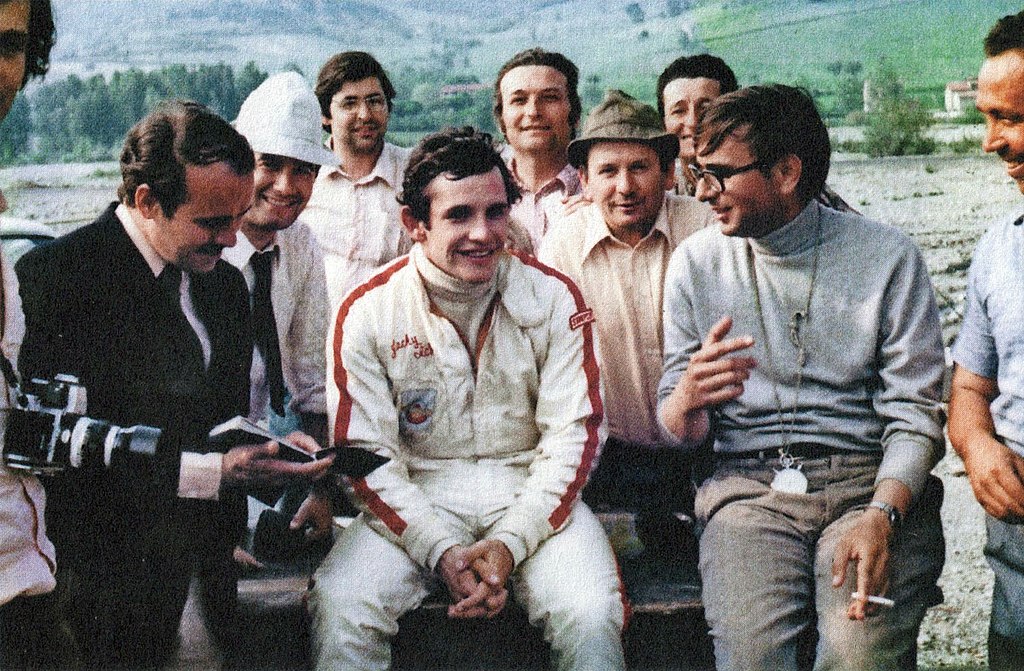
Jacky Ickx & Gian Paolo Dallara. (Photo: Public domain, via Wikimedia Commons)
Commemorative championship timepieces soon followed, including a manual wind Timex model that celebrated another photogenic racing icon: 1972 and 1974 Formula 1 World Champion Emerson Fittipaldi. By the late 1970s, both Heuer and Tissot had released digital racing models as part of their respective partnerships with Formula 1 teams. As both quartz and mechanical movements began powering these early F1 timepieces, the split set the stage for competing visions of what a motorsport watch could be in the following decades.
Unfortunately, the decade was also marked by high fatality rates. As motorsports gained increased visibility through television coverage, this created a reputational risk with sponsors. Mounting commercial and public pressure led to a turning point in safety standards, helping transform Grand Prix racing into a more viable marketing platform.
As safety improved, digital watches also soared in popularity heading into the 1980s. Some early resin digital motorsport watches included team-issued Honda F1-branded Casio and early G-Shock models, coinciding with the Japanese manufacturer’s second era of Formula 1 competition.
On the luxury end of the spectrum, Enzo Ferrari had signed a new deal with Cartier in 1983 to create the Ferrari Formula product line. This was done to combat sales of unauthorized watches. The arrangement not only highlighted a growing appeal of racing timepieces and merchandise, but also marked an early example of brand-protective licensing.
By this point, Formula 1 and 500cc Grand Prix motorcycle racing momentarily shared a similar aura of glamor and rebellious personalities. The high profile friendship between James Hunt and Barry Sheene throughout the 1970s was a particularly notable indicator. Despite these parallels, two-wheeled Grand Prix racing continued to get overlooked by watch brands of this era.
TAG Group famously bought Heuer in 1985, and rebranded as TAG Heuer. The colorful quartz-powered Formula 1 line was launched in 1986, which continued to reflect an era before the series name became a global trademark. This was followed by a historic partnership with Ayrton Senna in 1988 which set the tone for future racer endorsements.
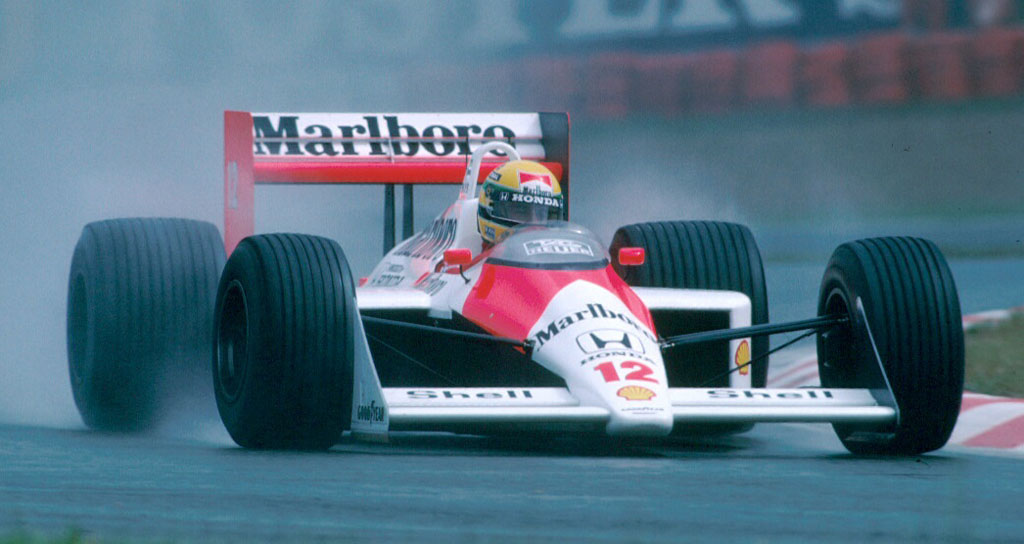
Ayrton Senna in 1988. (Photo: Instituto Ayrton Senna, licensed under CC BY 2.0, via Wikimedia Commons)
By the end of the decade, surviving Swiss watch brands had been repositioned as luxury products and consolidated under major conglomerates. These strategies helped preserve the mechanical watch industry, and laid the groundwork for later heritage revivals that would become a trend in future motorsport watches.
In the meantime, Longines had quietly established a timekeeping presence in both Formula 1 and Grand Prix motorcycle racing, hinting at the emergence of two-wheeled racing watches.
1990s: Icons, Nostalgia, and the Mechanical Resurgence
Looking back, the 1990s were a blend of past and future trends in both motorsport marketing and the watch industry. Most sponsorships had involved logos for television exposure, but high profile technical partnerships also began to surface. Repsol’s long term relationship with Honda in Grand Prix motorcycle racing and BMW’s entry into Formula 1 with Williams represented early examples of strategic brand participation with race teams.
Swiss watch brands were now firmly positioned in the luxury sector, which was reflected by a small resurgence in mechanical motorsport watches. Ferrari branding was now appearing on Girard-Perregaux models, while Omega introduced Michael Schumacher editions in their Speedmaster line in 1996, when the German legend began his storied tenure with the Italian team.
Throughout much of the decade, TAG Heuer’s Formula 1 line remained a familiar sight in both Grand Prix paddocks and watch boutiques. The brand’s first Ayrton Senna edition, developed with input from the Brazilian legend before his tragic death during the 1994 San Marino Grand Prix, added emotional weight to its racing partnerships. The 1998 Monaco ‘Heuer Re-Edition’ reflected a growing interest in heritage revivals and motorsport nostalgia.
An evolutionary step on the commercial side also occurred around 1994, when a series of trademark filings and registrations began establishing “Formula 1” and “F1” as protected commercial properties in different markets.
The 1990s also put Grand Prix motorcycle racing on the horological map. Certina produced multiple models for both Mick Doohan and Àlex Crivillé, two riders who dominated the sport in the latter half of the decade. Doohan famously came back from near-career-ending injuries to win five consecutive 500cc world titles, while Crivillé became the first Spanish premier class world champion in 1999.
While watch partnerships in Grand Prix motorcycle racing have previously existed, no relevant watches have been successfully documented until this point.
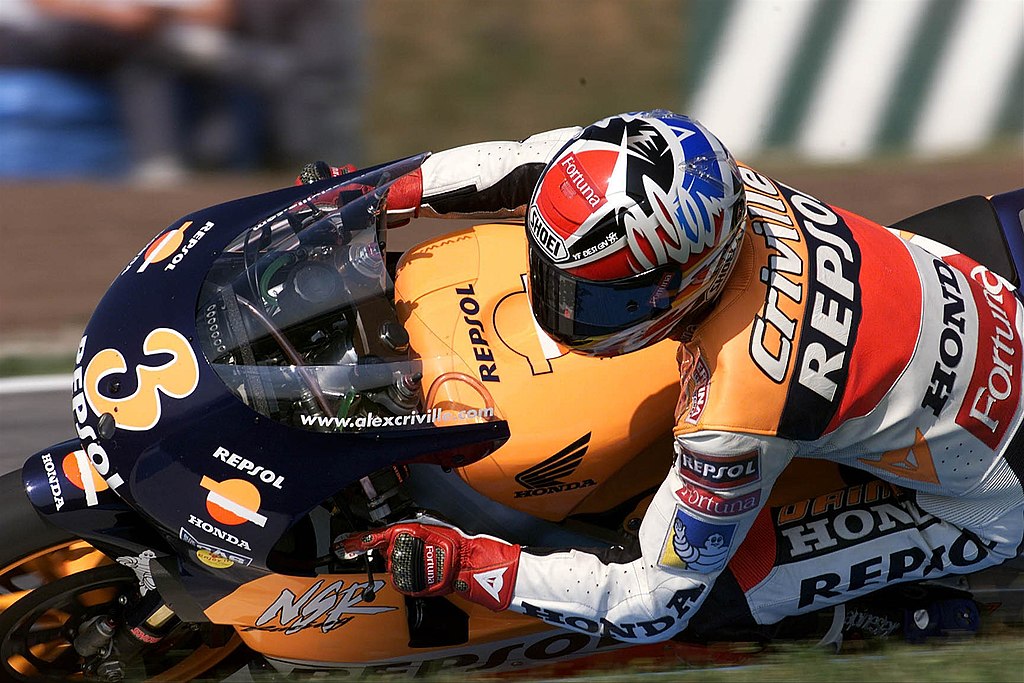
Àlex Crivillé at the 1999 Catalan motorcycle Grand Prix. (Photo: Box Repsol, licensed under CC BY 2.0, via Wikimedia Commons)
2000s: Broadening Horizons
By the turn of the new millennium, licensed motorsport watches entered a notable expansion phase that would serve a growing range of audiences. As MotoGP entered the fray and Formula 1 underwent a shifting media landscape, these changes were captured in the watches of this era. While some have gone on to become classics, others faded into historical footnotes, demonstrating that simple co-branding was never a guaranteed recipe for success.
A key milestone came in 2001 when Tissot became the Official Timekeeper of Grand Prix motorcycle racing. The series was rebranded as MotoGP the following season, with 500cc two-stroke machinery replaced by modern four-stroke prototypes. Tissot’s partnership soon grew to include officially licensed MotoGP chronographs and a range of rider edition models. Perhaps with the increasing popularity of Valentino Rossi, who was quickly transcending the sport, MotoGP soon evolved into a viable watch marketing platform that drew in brands previously unaffiliated with Grand Prix racing.
While MotoGP grew as a new frontier, the watch industry was undergoing a period of diversification. On the luxury end, Richard Mille served as a prime example of a brand involved in both the complication arms race and creation of the loosely defined “hyperwatch” category, notably developing timepieces that could withstand Formula 1 G-forces. At the same time, brands like G-Shock, Jacques Lemans, and Viceroy formed partnerships that targeted more affordable market segments.
The dual trend of high end innovation and mass market accessibility both mirrored and forecasted the broader shifts in motorsport marketing. Under Bernie Ecclestone, Formula 1 continued to cater to an older and wealthier demographic. The “F1 Supremo” had built the sport’s global profile by pioneering the sale of broadcasting rights, but the dominance of television had noticeably faded by the end of the decade.
Early 2010s: Content, Culture, and Collaborations
The 2010s marked a transformative era for branding and licensing, driven by the explosive growth of social media. Major milestones included Instagram reaching 10 million monthly users in 2011, while Facebook surpassed one billion by the end of 2012. Smaller regional releases now also had the possibility for global visibility.
The digital boom was followed by a sharp rise in MotoGP rider editions released across multiple watch brands in 2013 and 2014. These partnerships represented a full range of price levels. On the mass market end, Marea launched the budget-friendly Pollycio 44 collection with 2014 rookie Pol Espargaró, while CVSTOS developed luxury hyperwatches with MotoGP veteran Dani Pedrosa.
Over a decade into the partnership, Tissot had become practically synonymous with MotoGP. The Tissot Pole Position awards had become a familiar feature of post-qualifying press conferences, blending into the backdrop for paddock regulars.
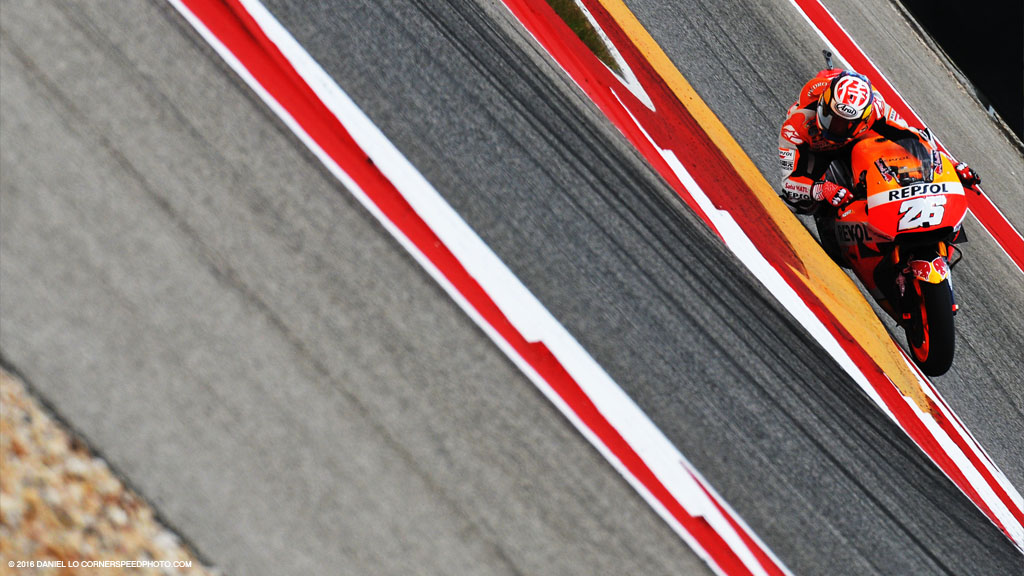
Dani Pedrosa at the 2016 Red Bull Grand Prix of the Americas. (Photo: © Daniel Lo)
By this time, race teams had also evolved into full-fledged marketing machines, forming technical, strategic, and lifestyle partnerships. One high profile example that resulted was the Richard Mille RM 50-03 Tourbillon Split-Seconds Chronograph McLaren F1, which would be released in 2017. More than simply a high tech team-branded timepiece, the chronograph was also a technical collaboration between Richard Mille, the McLaren F1 team, and the University of Manchester.
Late 2010s and Early 2020s: Unification and New Frontiers
2017 was also a major turning point when Liberty Media bought Formula 1, and immediately shifted its marketing strategy to a more fan-friendly and accessible approach. This resulted in a massive social media presence and the popular Drive to Survive series on Netflix, which introduced the sport to millions of new fans.
Despite the departure from Ecclestone’s “old boys club” era, luxury watch brands remained a strong presence in the paddock. Casio stood out as the only non-luxury watchmaker on the grid, with their pre-existing partnership seemingly aimed at younger audiences. The Japanese brand seemed uniquely positioned to capitalize on the emerging market segment. Yet within a few years, Casio’s agreement came to a scheduled end without renewal. This may reflect Formula 1’s enduring appeal to an affluent demographic, reinforced by Rolex serving as the Official Timekeeper during the era.
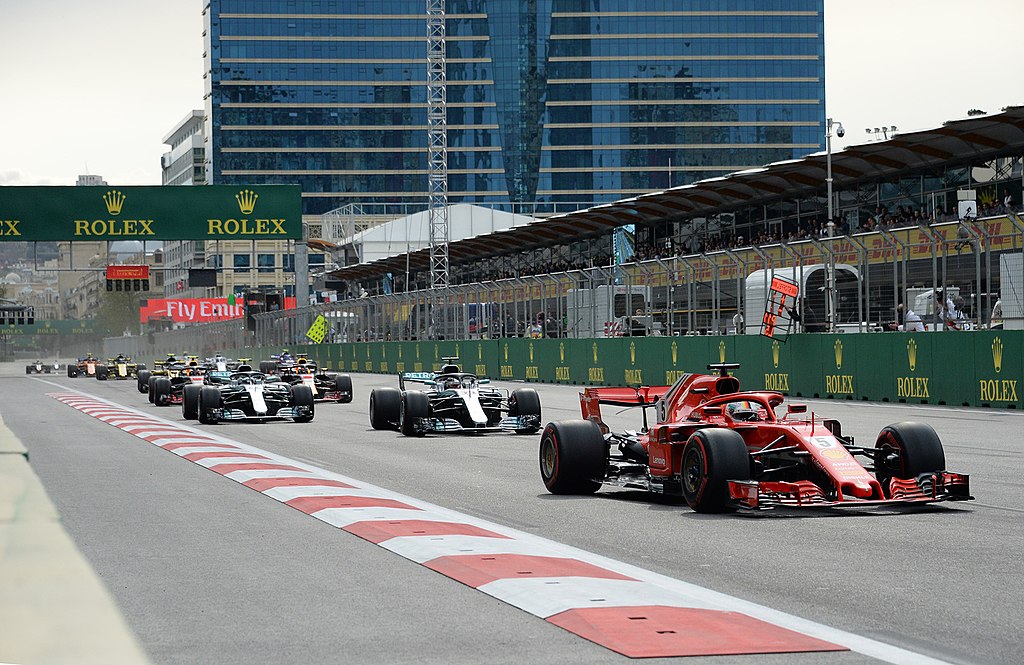
Rolex branding at the 2018 Azerbaijan Grand Prix. (Photo: President.az, licensed under CC BY 4.0, via Wikimedia Commons)
In both Formula 1 and MotoGP, subsequent collaborations increasingly came from premium and luxury segments. Some leaned into heritage revivals while others pushed forward with cutting edge timepieces. This was illustrated by releases like Yema’s 2019 reissue with Mario Andretti and RO-NI’s collaboration with Giacomo Agostini in 2022. TAG Heuer’s lineup has done both.
Still, more accessible options have remained in the market. Brands like Omologato and Cadola have maintained a presence in the motorsport-inspired niche at modest price points. Tissot renewed its contract with MotoGP in 2021, the 20th anniversary of the partnership, and looks set to continue releasing MotoGP edition quartz models.
Following its success with Formula 1, Liberty Media completed its acquisition of MotoGP in June of 2025, marking a new chapter for the series. At the time, President and CEO Derek Chang emphasized its untapped potential, stating, “We believe the sport and brand have significant growth potential, which we aim to unlock by deepening our connection with the core fan base and reaching a broader global audience.” Up to this point, watch brand sponsorships of MotoGP teams have remained relatively rare. Whether or not this will soon change remains to be seen.
The Future and Legacy of Motorsport Watches
Looking ahead, motorsport watches continue to play an important role in both innovation and culture. In a milestone event, IWC Schaffhausen sponsored the Sir Lewis Hamilton-produced film F1: the Movie in 2025. The brand’s logo appeared on the fictional APXGP team’s livery and uniforms, and a bespoke period timepiece was even created for the film’s main character, portrayed by Brad Pitt—himself a MotoGP and Formula 1 fan. Several APXGP-branded models have also been released during the buildup to the film, resulting in a unique category of licensed motorsport watches that blur the lines between fiction and reality.
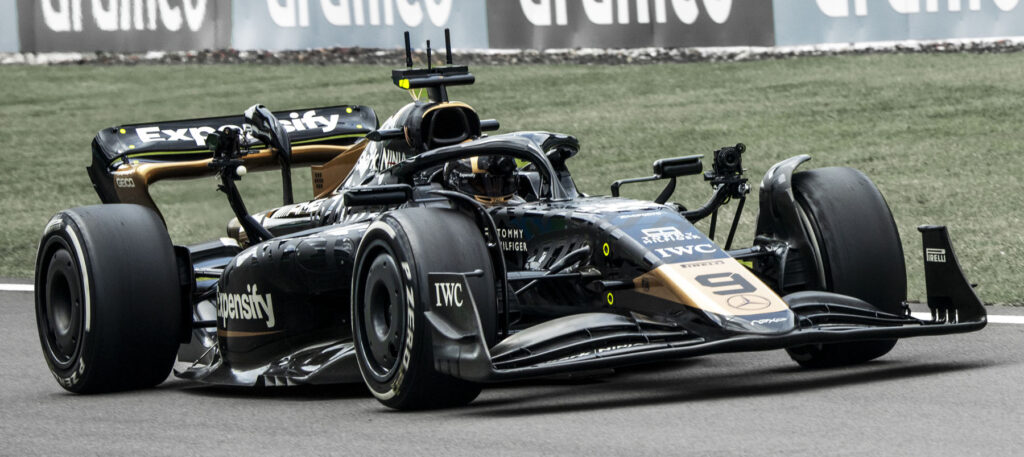
IWC logos appear on an APXGP filming car. (Photo: Courtesy of IWC Schaffhausen)
Motorsport watches have long reflected the commercial dynamics behind Formula 1 and MotoGP. Whether shaped by genuine collaboration or simply to spark some excitement among fans, they have quietly charted the evolution of motorsport marketing. As both series move forward under shared leadership, these timepieces remain vital links to the people, machines, and moments that define Grand Prix history.
All brands, teams, and individuals mentioned are included solely for historical context. No commercial affiliation or endorsement is implied.
References
1950s
https://www.autoweek.com/car-life/a1973631/prancing-horses-and-sweeping-hands-history-ferrari-watch/
https://www.facebook.com/LonginesZA/posts/1324387397608406/
https://enicar.org/2019/11/14/champions-prefer-enicar/
1960s
https://www.formulaonehistory.com/the-first-sponsor-in-formula-one/
https://magazine.tagheuer.com/en/2022/10/24/unsung-heroes-jo-siffert/
https://magazine.tagheuer.com/en/2024/12/09/the-history-of-the-calibre-11-and-the-tag-heuer-monaco-chronomatic/
https://www.tagheuer.com/us/en/partnerships/steve-mcqueen.html
1970s
https://mycarquest.com/2025/09/the-chronograph-watch-and-its-motorsport-heritage.html
https://www.tagheuer.com/us/en/vintage-collection/heuer-easy-rider.html
https://www.vintagetimexwatches.com/393091-02575-emerson-fittipaldi/
https://www.tagheuer.com/int/en/vintage-collection/vintage-heuer-monza.html
https://silodrome.com/heuer-ferrari-chronosplit/
https://wornandwound.com/watches-and-f1-tissot-lotus-f1/
https://www.jalopnik.com/why-the-1970s-were-such-a-pivotal-era-for-safety-in-for-1847660871/
https://www.fim-moto.com/en/news/news-detail/article/fim-history-flash-back-1970-1975
1980s
https://www.watchuseek.com/threads/im-keeping-my-dads-old-f-90-going.5170223/
https://www.instagram.com/p/C2qsiBuPwRe/
https://jp.mercari.com/item/m16971802006
http://www.gsking.net/uebersicht-modell-geschichte-der-g-shock-dw-5000er-screwback-serie-1-generation/
https://youtu.be/Gc5DrNkcdro?si=qViCfkUETlaI1YrB&t=407
https://www.referenceforbusiness.com/history2/92/TAG-Heuer-S-A.html
https://magazine.tagheuer.com/en/2025/01/09/a-legacy-in-every-lap-the-history-of-the-tag-heuer-formula-1-collection/
https://www.gearpatrol.com/watches/a35003079/swiss-watch-brands/
https://www.longines.com/en-us/magazine/pioneer-spirits/timing-formula-one/
https://www.youtube.com/watch?v=iTyFR9SVCbc
https://www.youtube.com/watch?v=8CrGhG67quw
1990s
https://lubricants.repsol.com/en/news/motogp-2024-equipo-repsol-honda/
https://www.f1technical.net/features/16839
https://quillandpad.com/2021/06/05/history-of-ferrari-watches-girard-perregaux-pour-ferrari/
https://www.fratellowatches.com/speedy-tuesday-speedmaster-schumacher-yellow/
https://tagheuerforums.com/threads/1990-tyrrell-f1-team-watch-tag-heuer-formula-1-blue-white.169774/
https://tagheuerenthusiast.blogspot.com/2021/07/history-monaco-1997.html
https://magazine.tagheuer.com/en/2022/05/02/the-ultimate-collectors-guide-tag-heuer-senna-special-editions/
https://trademarks.justia.com/745/27/f-formula-74527520.html
https://www.wipo.int/amc/en/domains/decisions/html/2009/d2009-0760.html
https://ttabvue.uspto.gov/ttabvue/v?pnam=FORMULA%20ONE%20LICENSING%20B.V%20%20&page=10
https://uspto.report/TM/76550991
https://www.watchuseek.com/threads/certina-ds-michael-doohan.97080/
https://vintagewatchplace.com/new-old-stock-very-rare-certina-alex-criville-special-diver-chronograph-vintage-nos/
2000s
https://www.tissotwatches.com/en-us/tissot-world-sport-partnerships.html
https://magazine.cycleworld.com/article/2002/1/1/farewell-500s
https://www.tissotwatches.com/en-us/magazine-news-t-race-motogp-75th-editions.html
https://www.motogp.com/en/blog-articles/who-is-the-best-motogp-rider-of-all-time-stats-records-legends-compared/522853
https://www.richardmille.com/historical-models/rm-006-tourbillon-felipe-massa
https://casiofanmag.com/news/g-7710krt-3-g-shock-kawasaki-racing-team-limited/
https://www.europastar.com/magazine/highlights/1002763480-jacques-lemans-gets-the-f1-nod.html
https://www.youtube.com/watch?v=u770zAzH_vk
https://www.gpblog.com/en/general/liberty-media-revitalises-formula-1.html
2010s
https://techcrunch.com/2016/06/21/instagram-500-million/
https://www.theguardian.com/technology/2012/oct/04/facebook-hits-billion-users-a-month
https://www.youtube.com/watch?v=1kCKEFKFNX0
https://www.tatlerasia.com/the-scene/people-parties/cvstos-with-dani-pedrosa
https://medium.com/@leahr./the-business-behind-the-grid-how-f1-teams-market-themselves-b1f9aa3f291e
https://www.richardmille.com/historical-models/rm-50-03-tourbillon-split-seconds-chronograph-mclaren-f1
https://www.manchester.ac.uk/about/news/worlds-lightest-mechanical-watch-revealed-thanks-to-graphene/
https://www.formula1.com/en/latest/article/liberty-completes-f1-acquisition.3zzGTfOwC4OkEc8EAKMKKw
https://www.ft.com/content/6a5cb403-5430-49ec-a69c-150adfcbec7e
https://casiofanmag.com/news/edifice-efr-556tr-scuderia-toro-rosso-limited-edition/
https://www.ablogtowatch.com/rolex-replaces-hublot-as-official-formula-1-racing-timekeeper/
2020s
https://www.watchgecko.com/blogs/magazine/yema-rallye-mario-andretti-special-edition-review
https://www.instagram.com/p/CyJpEPXvZ9l/
https://www.motogp.com/en/news/2021/11/16/tissot-to-continue-as-official-timekeeper-of-motogp/186215
https://sportsmintmedia.com/motogp-extends-partnership-with-tissot/
https://revolutionwatch.com/iwc-f1-the-movie/
https://www.formula1.com/en/latest/article/apple-original-films-f1-movie-lewis-hamilton-brad-pitt-producer.5kgOsgm7TqHxvhFQ2taeRd
https://press.iwc.com/iwc-partners-with-apple-original-films-formula-one-racing-feature-en/
https://fandomwire.com/brad-pitts-f1-alternate-ending-explained-kosinskis-big-risk-couldve-prevented-the-top-gun-maverick-trope/
https://press.iwc.com/iwc-watches-inspired-new-movie-f1-en/